
Why Website Projects Go Over Budget – And How to Prevent It
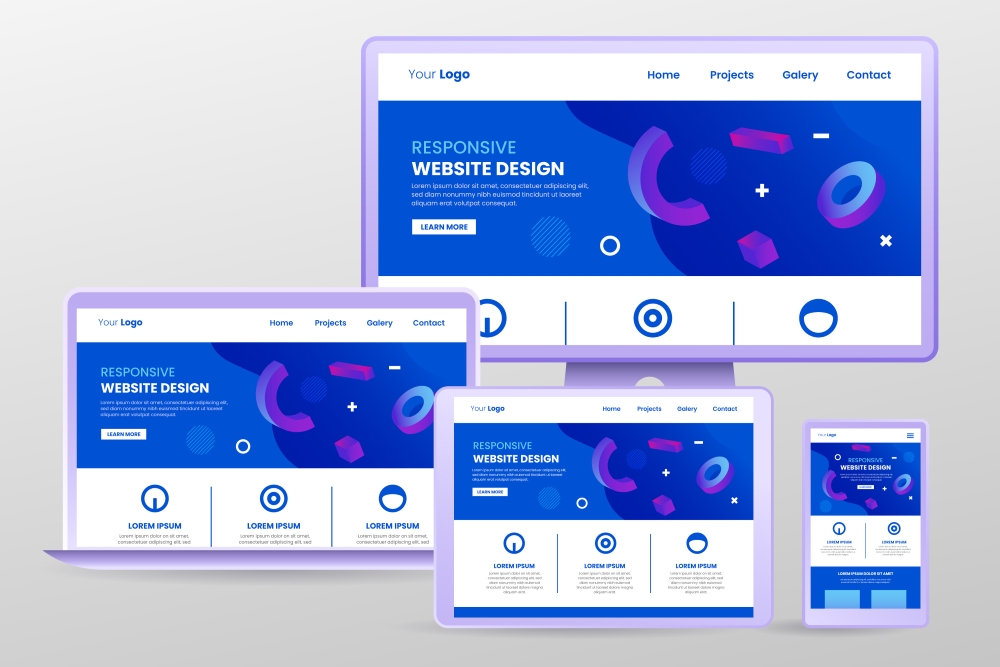
When Does Your Business Need a New Website or a Website Rebuild? 10 Signs It’s Time to Act
Your website is often the first serious interaction a potential customer has with your business. Before speaking with your sales team, requesting a proposal, or contacting your company, prospects may already have formed an opinion based on what they see online.
But how do you know when your existing website is simply due for a refresh-and when it has become a genuine business problem?
Not every website needs to be rebuilt from the ground up. Sometimes a few strategic improvements are enough. In other situations, continuing to patch an outdated website can cost more time and money than rebuilding it properly.
So, when does a business actually need a new website or a website rebuild?
Here are ten signs that it may be time to take a closer look.
1. Your website no longer reflects your business
Businesses evolve.
Your services change. Your target customers change. Your positioning changes. Your team grows. You may enter new markets, introduce new capabilities, or shift from being a small specialist provider to a larger organization.
If your website still communicates what your company was five years ago, there is a disconnect between your business and your digital presence.
A website should accurately communicate:
- What your company does
- Who you serve
- What makes you different
- Which products or services you offer
- Why a prospect should choose you
- How customers can take the next step
If visitors have to work too hard to understand your business, the website is already creating friction.
2. Your website looks outdated compared with your competitors
Design is not simply about making a website look modern.
It influences perceived credibility.
When prospective customers compare several companies, an outdated website can make an otherwise capable organization appear less established, less innovative, or less attentive to detail.
This is particularly important for B2B businesses where a website may be reviewed by multiple stakeholders before a sales conversation even begins.
Ask yourself:
Does our website represent the quality of the company we are today?
If the answer is no, a redesign may be justified.
3. Your website is difficult to use on mobile devices
A website that works well on a desktop but provides a poor mobile experience is no longer sufficient.
Visitors expect pages to resize correctly, navigation to be intuitive, content to remain readable, and important actions such as contacting the business or requesting information to be easy to complete.
Mobile responsiveness should be considered a baseline requirement-not an optional enhancement.
If users have to pinch, zoom, scroll excessively, or hunt for important information, your website is creating unnecessary barriers.
4. Your website is slow
Performance matters.
Large images, outdated themes, excessive plugins, inefficient code, poor hosting configurations, third-party scripts, and legacy technologies can all contribute to slow page loading.
A slow website can affect both user experience and organic search performance.
But speed problems should be diagnosed before deciding on a rebuild.
Sometimes optimization, image compression, caching, hosting improvements, or code cleanup can solve the problem.
If performance issues are symptoms of a much larger technical architecture problem, however, rebuilding may be the better long-term investment.
5. Your website is difficult for your team to manage
Your website should not require a developer every time someone needs to update a heading, publish an article, change an image, update a service page, or create a landing page.
If your marketing team cannot easily maintain the website, the platform may no longer match the organization’s needs.
A modern content management system can give internal teams greater control over:
- Website content
- Blogs and resources
- Landing pages
- SEO metadata
- Forms
- Calls to action
- Campaign content
- User journeys
The objective is not simply to have a new CMS.
The objective is to give the business a website that can evolve without creating unnecessary operational dependency.
6. Your website is not generating the business results you expect
This is one of the most important questions to ask.
A website should have a measurable business purpose.
Depending on the organization, that might mean:
- Generating qualified leads
- Driving enquiries
- Increasing product sales
- Supporting recruitment
- Educating prospects
- Increasing demo requests
- Encouraging downloads
- Supporting existing customers
If traffic is coming to the website but visitors are not taking meaningful actions, the problem may not simply be the design.
It could be messaging, navigation, content, calls to action, page structure, technical performance, targeting, or the overall customer journey.
A website rebuild should therefore start with business objectives-not a homepage mockup.
7. Your website architecture has become difficult to scale
Many websites start small.
A company may initially have five or ten pages. Several years later, it may have hundreds of pages, multiple service lines, regional content, resources, blogs, forms, integrations, and different audiences.
The original architecture may no longer be suitable.
You may encounter problems such as:
- Difficult navigation
- Duplicate content
- Poor content organization
- Inconsistent page structures
- Complicated URL structures
- Difficult content management
- Limited personalization
- Poor search functionality
At that point, a rebuild can provide an opportunity to rethink the information architecture rather than continuing to add layers to an already complicated system.
8. Your website does not integrate properly with your other business systems
Modern websites rarely operate in isolation.
A website may need to connect with:
- CRM platforms
- Marketing automation
- ERP systems
- HR platforms
- Customer portals
- Analytics platforms
- Payment systems
- Email marketing tools
- Business applications
- APIs and third-party services
If your current website relies heavily on manual data entry or disconnected systems, rebuilding the website can be an opportunity to improve the entire digital workflow.
The goal should be to reduce friction between the website and the systems your business already uses.
9. Your website is difficult to maintain securely
Older websites can accumulate technical debt.
Outdated plugins, unsupported technologies, legacy code, obsolete integrations, and poorly maintained components can increase maintenance effort and security risk.
If your development team is spending more time fixing old problems than delivering new capabilities, that is an important signal.
A rebuild can provide a cleaner technical foundation with:
- Supported technologies
- Better development practices
- Improved security
- Better performance
- Easier maintenance
- More scalable architecture
However, security concerns should be evaluated carefully. A rebuild should solve the underlying problem rather than simply replacing one collection of outdated components with another.
10. You are constantly adding fixes instead of solving the underlying problem
This may be the biggest warning sign of all.
One small change becomes another workaround.
Then another plugin is installed.
Then another custom script is added.
Then another developer has to fix something that broke after the previous update.
Eventually, the website becomes a collection of patches rather than a coherent digital platform.
At some point, the question should change from:
“How do we fix this?”
to:
“Would rebuilding this properly be more cost-effective?”
Do you actually need a complete rebuild?
Not necessarily.
Before committing to a rebuild, evaluate the website objectively.
A targeted redesign may be enough if:
- The underlying platform is still appropriate
- The site architecture is sound
- Performance is acceptable
- Your team can manage the content
- Integrations are working correctly
- The primary problem is visual design or messaging
A rebuild may make more sense if:
- The technology is outdated
- The CMS limits your team
- The architecture is difficult to scale
- Integrations are unreliable or overly manual
- Performance problems are structural
- Security and maintenance have become major concerns
- The website no longer supports your business strategy
The answer should be based on the business case—not simply on how old the website looks.
A website rebuild should start with strategy
One common mistake is starting a website project by immediately discussing colors, layouts, animations, and homepage designs.
Those things matter, but they should come later.
A successful website project should first establish:
Business objectives → Target audiences → User journeys → Information architecture → Content strategy → Technology → Design → Development → Measurement
This approach helps ensure that the new website is not simply newer.
It is better.
The real question isn’t “Is our website old?”
A five-year-old website can still perform extremely well.
A two-year-old website can already be holding a business back.
The real question is:
Does your website support where your business is going?
If it communicates your value clearly, performs well, supports your customers, integrates with your business systems, and can evolve with your organization, there may be no reason to rebuild it.
But if your website has become a constraint on marketing, sales, operations, or growth, continuing to patch it may simply postpone the inevitable.
A website rebuild should not be treated as an exercise in making a website look newer.
It should be an opportunity to create a stronger digital foundation for the next stage of the business.
Need help deciding whether to redesign or rebuild?
At SoftLab, we help businesses evaluate their existing websites, identify technical and business gaps, and determine the right path forward-from targeted improvements and redesigns to complete website development and platform migrations.
The first step is not necessarily building a new website.
It is understanding what your current website is preventing your business from doing.
Related posts