
HubSpot MCP: What Happens When AI Can Actually Work With Your CRM?
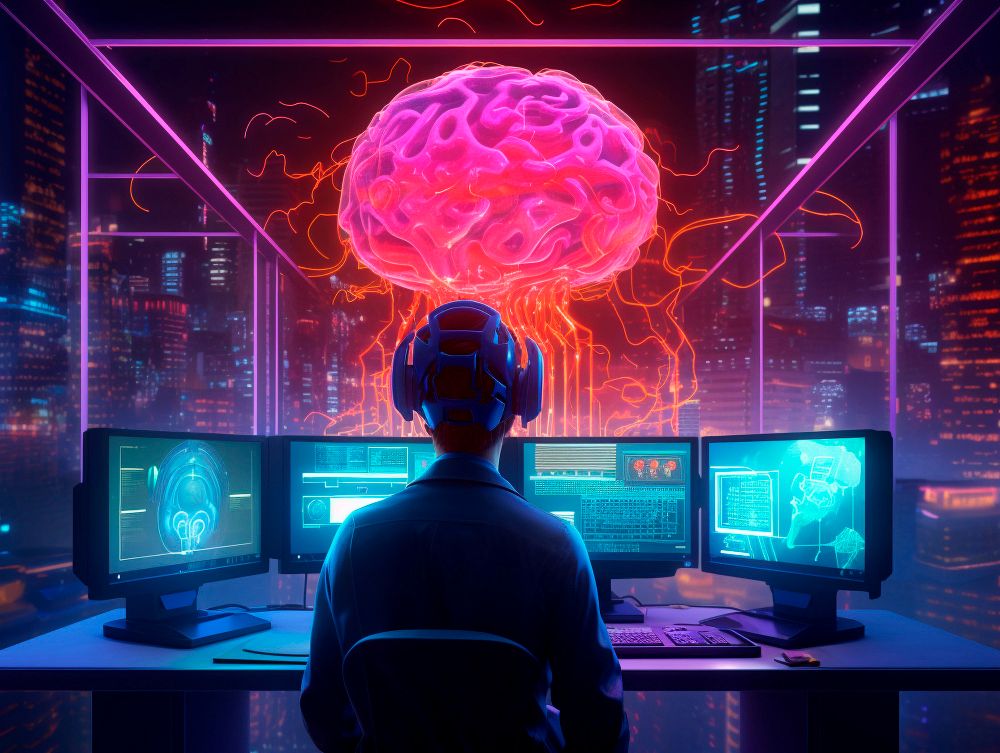
AI Can Write Your Code – But Do You Know Why It Works?
Artificial intelligence is changing the way software is built.
Today, a developer can describe a requirement in plain English and AI can generate the code in seconds. It can write functions, fix errors, create tests, explain code and even help build complete applications.
That sounds like progress — and it is.
But there is an important question we need to ask:
If AI keeps writing the code for us, will we eventually stop understanding how the code actually works?
The Convenience of AI Comes With a Catch
There is nothing wrong with using AI to make development faster. In fact, developers should use every tool available to improve productivity.
The concern starts when convenience replaces understanding.
Imagine a developer who needs to connect an application to an API. Instead of learning how the API works, they ask AI to create the integration. The code works, so they move on.
A few weeks later, something breaks.
Now they need to understand authentication, API requests, error handling and data structures — but they never really learned those concepts in the first place.
AI solved the immediate problem.
But it didn’t build the developer’s knowledge.
That distinction is becoming increasingly important.
Working Code Doesn’t Always Mean Good Code
One of the easiest traps with AI-generated code is assuming that if it works, it must be correct.
It isn’t.
AI can produce code that looks professional and runs successfully while still being inefficient, insecure, difficult to maintain or unsuitable for the application’s architecture.
This is why experienced developers remain important.
A developer needs to look beyond “Does this code work?” and ask:
“Why was it written this way, and is this actually the right solution?”
AI can generate an answer very quickly.
It cannot replace the judgment required to evaluate that answer.
Are We Creating a Generation That Knows Less?
This is where the conversation becomes more interesting.
People learning software development today have access to something previous generations never had: an AI that can explain concepts, write examples and solve problems instantly.
That’s an incredible advantage.
But it can also become a shortcut around learning.
If a student asks AI to solve every programming exercise, they may complete more assignments while developing less understanding.
If a junior developer asks AI to write every function, they may deliver features faster without developing the skills needed to design and troubleshoot complex systems.
The problem isn’t using AI.
The problem is never learning without it.
AI Should Be Your Accelerator, Not Your Replacement
The best developers of the AI era won’t necessarily be the people who write every line of code manually.
They will be the people who understand the problem, know the fundamentals and use AI to move faster.
Think of AI as an accelerator.
You still need to know where you are going.
A strong developer might use AI to generate an initial solution, then review it, test it, improve it and understand every important part before putting it into production.
That approach creates something much more valuable than AI-generated code:
AI-assisted expertise.
The Skill That Matters Most
As AI becomes better at writing code, knowing how to write code may become only one part of being a good developer.
Understanding why something should be built a certain way may become even more important.
The ability to question AI, identify incorrect assumptions, recognize security risks and make sound technical decisions will separate skilled developers from people who simply know how to generate prompts.
In other words, AI may reduce the amount of code we need to write — but it shouldn’t reduce the amount we need to think.
So, Should We Be Worried?
Not necessarily.
Every major technology has changed the skills people need.
The calculator didn’t eliminate mathematics. Search engines didn’t eliminate knowledge. Automation didn’t eliminate human expertise.
AI is likely to do something similar to software development.
It will remove some of the repetitive work and allow developers to focus more on solving problems, designing systems and making decisions.
But there is one condition:
We must continue learning the fundamentals.
Use AI.
Let it write code.
Let it explain difficult concepts.
Let it find bugs and suggest better approaches.
But don’t blindly accept its answers.
Because the future isn’t likely to belong to developers who refuse to use AI.
And it won’t belong to people who let AI do all their thinking either.
It will belong to those who know how to use AI without losing the ability to think for themselves.
Final Thought
AI can write your code faster than ever.
But when that code reaches production, you are still responsible for it.
So the next time AI gives you a perfect-looking solution, don’t just ask:
“Does it work?”
Ask the more important question:
“Do I understand why it works?”
Related posts